Puri Tarkari (Nepali Puffed Bread with Spicy Potato Curry)
Puri Tarkari, Nepal's beloved breakfast and festival meal. Golden puffed wheat bread served with a spiced potato curry tempered in mustard oil with methi and timur.
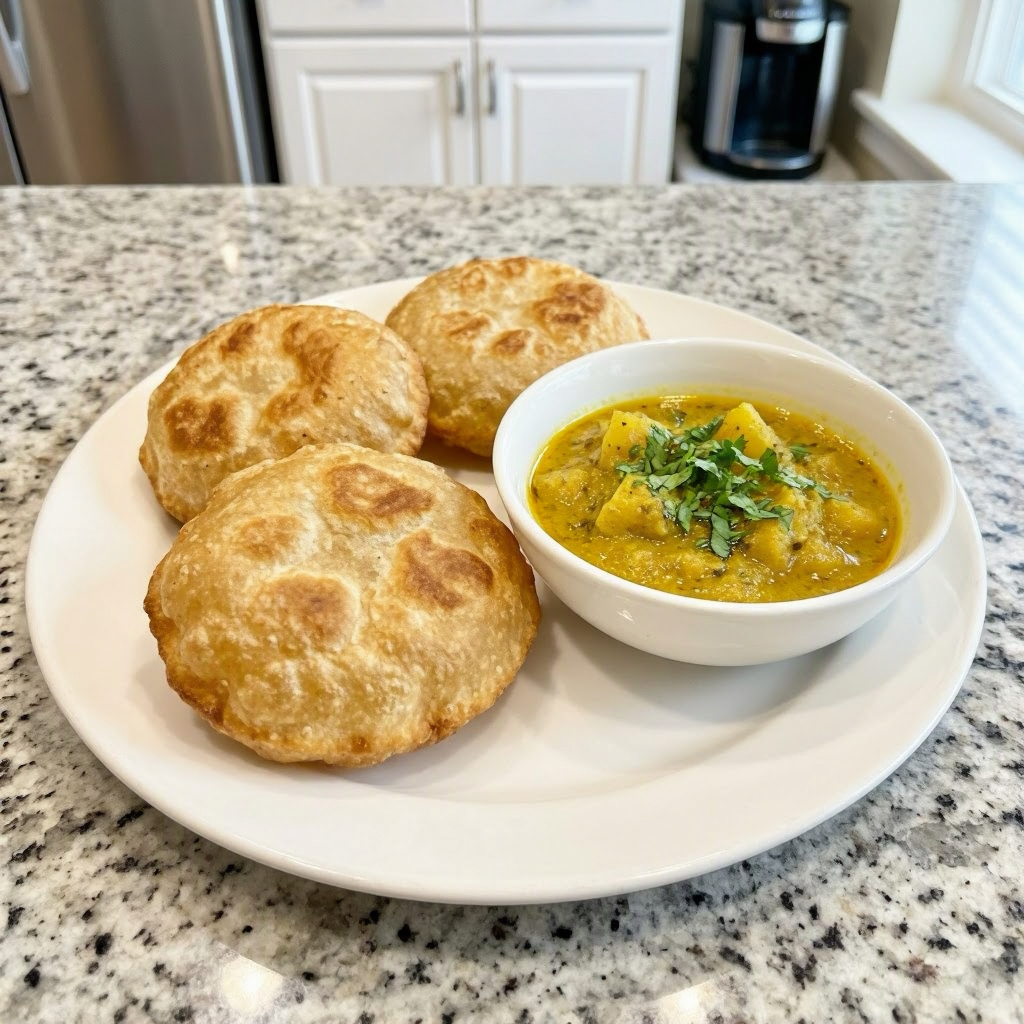
There are mornings in Nepal, Saturdays, Tihar, after a long pooja, when only one breakfast will do. Puri tarkari: golden orbs of puffed whole-wheat bread served alongside a hot, mustard-oil-perfumed potato curry, with maybe a small bowl of yogurt and a spoonful of pickle on the side. It is the breakfast every Nepali tea shop in Asan and Patan has been making the same way for generations, and it is the smell that drifts down the alleys on festival mornings.
The dish is two recipes in one: the puri (the bread) and the aloo tarkari (the potato curry). Both are simple, but each rewards a small piece of attention. The puri must be fried in oil hot enough to puff it on contact, and the tarkari must start with mustard oil bloomed properly with methi seeds, that is the smell of a Nepali kitchen at dawn.
Ingredients
For the puri (makes 12)
- 2 cups atta (whole-wheat flour), or 1.5 cups whole wheat + 1/2 cup all-purpose flour for a more delicate puri
- 1/2 teaspoon salt
- 1 tablespoon vegetable oil or melted ghee
- 3/4 cup warm water (more or less as needed)
- Neutral oil (about 3 cups), for deep frying
For the aloo tarkari (potato curry)
- 4 medium potatoes (about 600 g), peeled and cut into 3/4-inch cubes
- 3 tablespoons mustard oil
- 1/2 teaspoon methi (fenugreek) seeds
- 1 teaspoon cumin seeds
- 1 dried red chili, broken in half
- 1/4 teaspoon asafoetida (hing), optional but traditional
- 1 tablespoon ginger, finely minced
- 2 cloves garlic, finely minced
- 1 fresh green chili, finely chopped
- 1 medium tomato, finely chopped
- 1 teaspoon turmeric powder
- 1 teaspoon ground coriander
- 1/2 teaspoon Kashmiri chili powder
- 1/4 teaspoon ground timur (Nepali Sichuan pepper)
- 1.5 teaspoons salt, or to taste
- 2 cups warm water
- 2 tablespoons fresh cilantro, chopped, for garnish
Instructions
Make the puri dough first
- Mix and knead the dough: In a wide bowl, combine the flour and salt. Make a well in the center, drizzle in the tablespoon of oil, then add the warm water a little at a time, mixing with your fingers until a stiff but pliable dough forms. Knead on a clean surface for 5 minutes until smooth and just slightly tacky, puri dough should be firmer than chapati dough so it holds the puff. Cover with a damp cloth and rest for at least 20 minutes while you make the curry.
Make the aloo tarkari
Bloom the mustard oil: Heat the mustard oil in a heavy-bottomed pot over medium-high heat until it just begins to smoke and the raw bitterness lifts off. Reduce the heat to medium and add the methi seeds, cumin seeds, and dried red chili. Let them sizzle for 10–15 seconds, the methi should turn dark golden but not black, or it will turn the whole curry bitter.
Add the aromatics: Stir in the asafoetida (if using), ginger, garlic, and green chili. Cook for 30 seconds until fragrant. Add the chopped tomato, turmeric, ground coriander, Kashmiri chili powder, and salt. Cook for 3–4 minutes, mashing the tomato with the back of the spoon, until the mixture looks jammy and the oil starts to separate at the edges.
Add the potatoes: Tip in the cubed potatoes and stir well to coat them in the masala. Cook for 2 minutes so the potatoes start to absorb the spices.
Simmer: Add the warm water, bring to a gentle boil, then reduce the heat, cover partially, and simmer for 18–20 minutes until the potatoes are fork-tender and the gravy has thickened to a loose, spoonable consistency. The right tarkari is brothier than a curry but thicker than a soup. Stir in the timur, taste, and adjust salt. Cover and rest off the heat while you fry the puris.
Roll and fry the puris
Divide and roll: Divide the rested dough into 12 equal pieces and roll each into a smooth ball. Working one at a time on a lightly oiled (not floured, flour burns in the oil) surface, roll each ball into a 4-inch round about 2 mm thick. Keep the rolled puris under a damp cloth so they do not dry out.
Heat the oil: Pour the frying oil into a deep wok or karahi to a depth of 2 inches and heat over medium-high until it reaches 180–190°C / 360–375°F. Test with a tiny pinch of dough, it should sink, then bob up to the surface within 2 seconds and start sizzling immediately.
Fry one at a time: Slip a puri into the hot oil. It will sink, then float to the top within 5 seconds. Using the back of a slotted spoon, gently press down on the center of the puri so the whole disc is briefly submerged, this is the trick that makes them puff into perfect golden domes. Fry for about 20 seconds on the first side, flip, and fry for another 15–20 seconds until both sides are pale golden. Lift onto a paper-towel-lined plate or a wire rack.
Serve immediately: Pile the hot puris in a basket, ladle the tarkari into a warm bowl, and serve with aloo achar on the side, plain yogurt, and a small wedge of lime. Tear off pieces of puri with your hands, scoop up the curry, and eat it while the bread is still steaming.
Notes
- Why puris fail to puff: Oil too cold (the puri sinks and absorbs oil instead of puffing), dough too dry, dough rolled unevenly, or rolled too thick. Stay confident, keep the oil hot, and practice on the first one.
- Make-ahead: The dough holds for 4 hours at room temperature, covered. The tarkari is even better made the night before, reheat with a splash of water.
- Variations: For a Tihar breakfast, replace the green chili with two chopped tomatoes for a milder, sweeter tarkari that suits children. For a Newari pooja version, add a teaspoon of ground mustard seed paste (sarsiyaa) to the tempering for a sharper, more pungent curry.