Kheer (Nepali Rice Pudding)
Kheer, Nepal's beloved festival rice pudding. Slow-simmered basmati or short-grain rice in milk, perfumed with cardamom and bay, finished with raisins and almonds. Made on Janai Purnima and at every special occasion.
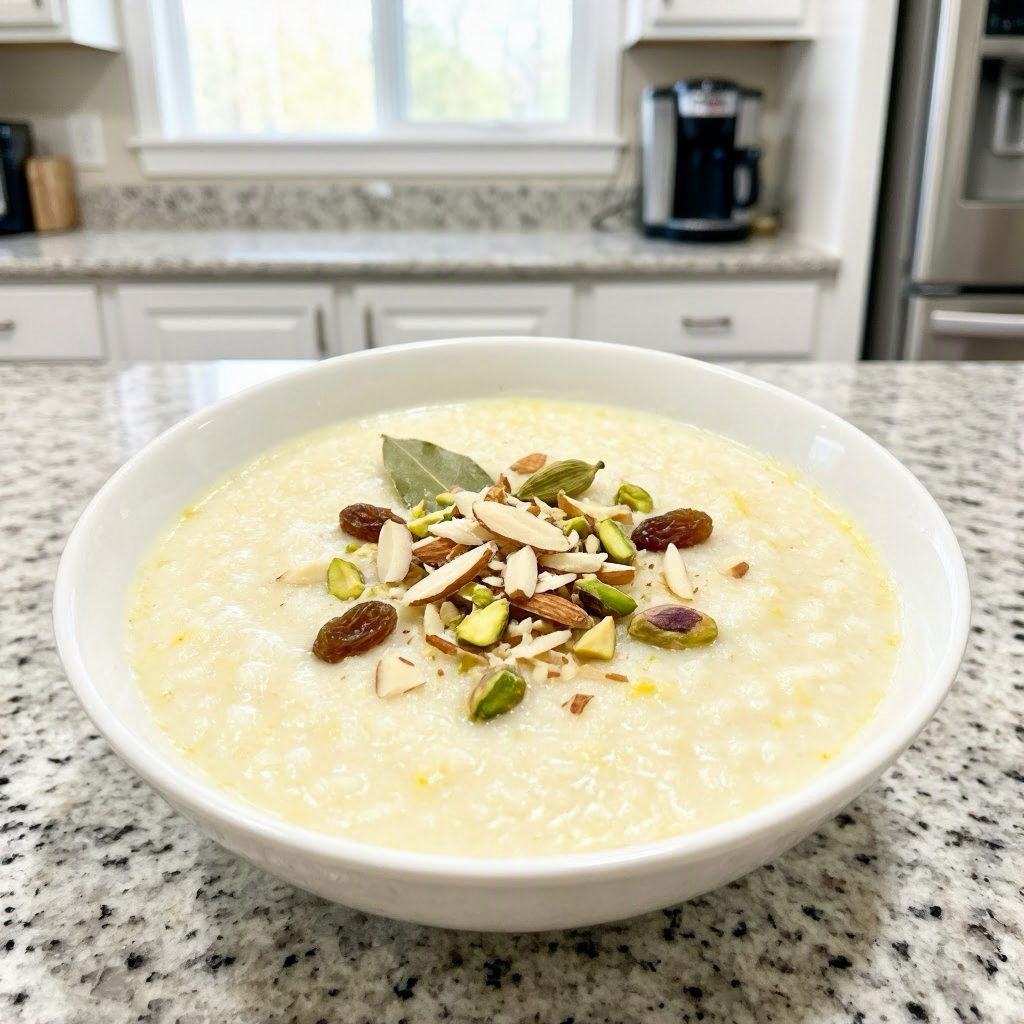
In Nepal, kheer is the dessert that marks every important moment, a baby’s first solid food (pasni), a coming-of-age ceremony, the Janai Purnima full moon in August when even the most devout fasters break their fast with a small bowl. There is no Nepali kitchen that does not know how to make it, and there are as many small variations as there are grandmothers, some use basmati, some short-grain, some sneak in a single bay leaf, some scent it with rose water at the end. What every version shares is the same ritual: long, slow simmering until the rice gives up its starch and the milk thickens into a fragrant, ivory-colored cream that you eat warm on a cool evening or chilled on a hot one.
There are no shortcuts. The best kheer is made the way every generation before us made it, in a heavy pot, on a low flame, with a wooden spoon and an hour of stirring. The quiet is part of the recipe.
Ingredients
- 1/3 cup basmati rice (or short-grain rice for a creamier kheer)
- 1.5 litres (6 cups) full-fat milk (whole milk; do not substitute low-fat)
- 1/2 cup sugar (or to taste, Nepali kheer leans subtly sweet, not dessert-sweet)
- 2 tablespoons ghee
- 1 bay leaf (Nepali / Indian bay, tej patta)
- 6 green cardamom pods, lightly cracked (or 1/2 teaspoon ground cardamom, added at the end)
- A pinch of saffron threads (optional, but lovely)
- 2 tablespoons raisins
- 2 tablespoons slivered almonds
- 1 tablespoon pistachios, slivered (optional, for garnish)
- 2 tablespoons cashews, halved
- A pinch of nutmeg, freshly grated (optional)
Instructions
Wash and lightly soak the rice: Rinse the rice in 2 changes of cold water until the water runs nearly clear, then cover with fresh water and soak for 15 minutes. Drain. The soak is short, you want the grains intact so they hold their shape in the long simmer.
Toast the rice in ghee: In a heavy-bottomed pot (a Dutch oven or thick-walled saucepan is ideal, thin pans will scorch the milk), melt 1 tablespoon of the ghee over medium heat. Add the bay leaf and the cracked cardamom pods and let them sizzle for 20 seconds until fragrant. Add the drained rice and stir for 1–2 minutes until the grains turn glossy and smell faintly nutty. This light toasting deepens the flavor of the finished kheer.
Add the milk and bring to a gentle boil: Pour in the cold milk and stir well to lift any rice stuck to the bottom. Increase the heat to medium-high and bring to a gentle boil, stirring every minute to prevent the milk from forming a skin or scorching. Watch closely, milk loves to boil over.
Reduce and simmer slowly, this is where kheer is made: Once the milk reaches a boil, immediately reduce the heat to low. Let the kheer simmer uncovered, stirring every 4–5 minutes with a wooden spoon, scraping the bottom and sides of the pot to prevent sticking. After about 45 minutes, the rice will have softened and broken down slightly, and the milk will have reduced by nearly half, to a thick, creamy consistency that coats the back of the spoon. Don’t walk away. This is meditative cooking, not unattended cooking; the bottom can scorch in 10 minutes if neglected.
Add the sugar: Stir in the sugar and the saffron (if using) and continue to simmer for another 5–8 minutes, stirring constantly. The sugar will thin the kheer slightly at first, then it will thicken again as the moisture cooks off. Taste and add more sugar 1 tablespoon at a time if you prefer it sweeter, but remember kheer thickens further as it cools.
Bloom the nuts and raisins: While the kheer finishes, melt the remaining tablespoon of ghee in a small pan over medium heat. Add the cashews and almonds and toast for 1–2 minutes until lightly golden. Toss in the raisins and cook for another 30 seconds, they will plump and burst slightly. Tip the entire pan, ghee and all, into the kheer.
Finish and rest: Stir in the nutmeg (if using) and remove the kheer from the heat. Fish out the bay leaf and the cardamom pods. Cover and let rest for 10 minutes, the rice continues to absorb the milk and the kheer reaches its proper consistency.
Serve warm or chilled: Ladle into small bowls. Garnish with the slivered pistachios. Serve warm in winter (the way it is served at Janai Purnima or after a bhoj) or chilled in summer (the way kids ask for it after school). It will keep, covered, in the fridge for 3 days; it thickens further as it sits, loosen with a splash of warm milk before serving.
Variations and notes
- Newari sikarni: Strain hung yogurt instead of milk and sweeten the same way for a thicker, tangier dessert traditionally served at Newari weddings.
- Khir-puri: A festival pairing, kheer served alongside small soft puris instead of rice. Especially associated with Tihar.
- Janai Purnima tradition: On the full moon of August (Shrawan Purnima), Brahmin and Chhetri men change their sacred thread (janai), and households eat kwati (a hearty mixed-bean soup) followed by kheer. The kheer is the sweetness that closes the meal.
- Why short-grain rice gives a creamier result: It releases more starch into the milk. Basmati gives a kheer with more distinct grains; short-grain (or even broken basmati) gives a softer, more porridge-like kheer. Both are correct.
- Don’t add the sugar early. Sugar slows the rice from breaking down. Always wait until the rice is properly softened, about 45 minutes in, before sweetening.