Bara (Newari Black Lentil Pancake)
Bara, the Newari black-lentil pancake. Soaked urad dal ground into a thick batter, cooked on a hot tawa, and topped with egg or minced meat. A Kathmandu Valley classic.
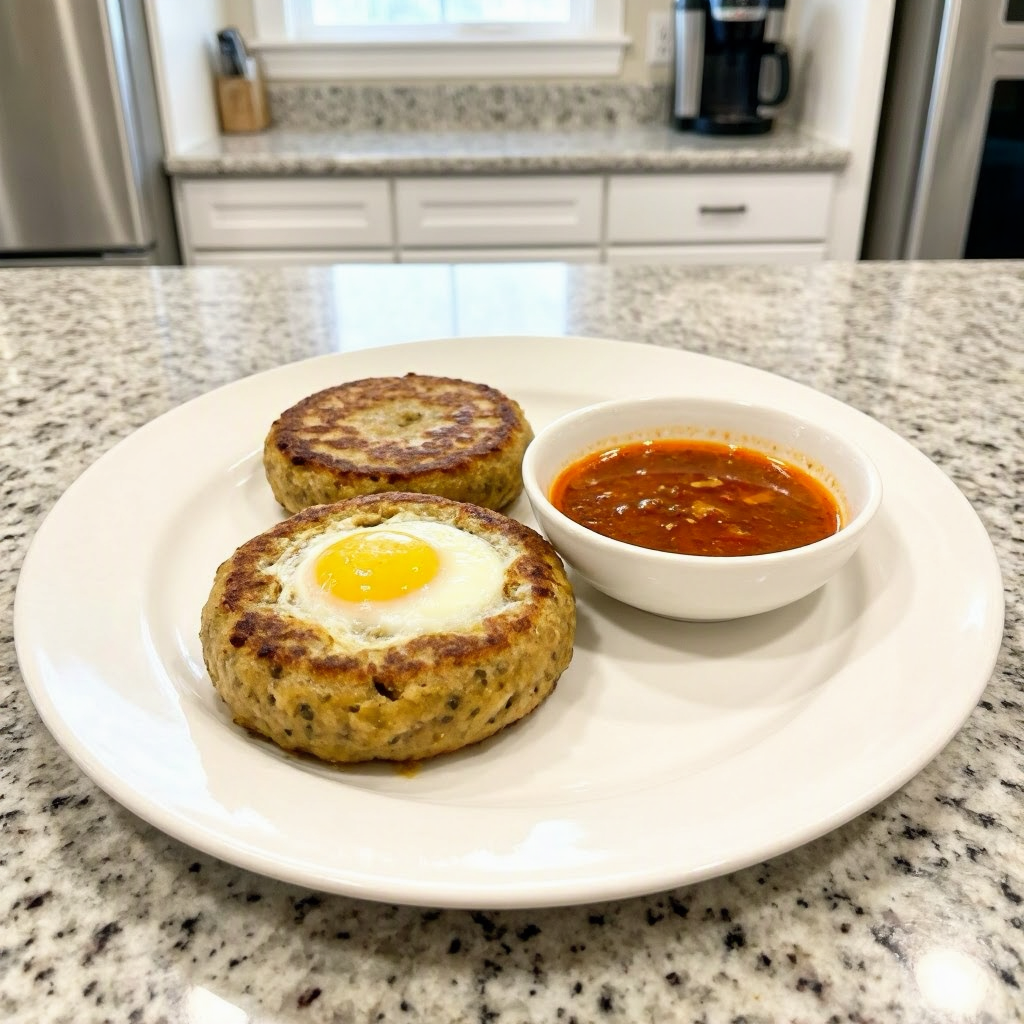
In Newari neighbourhoods of Kathmandu and Patan, bara is the smell of slow Sunday mornings. A heavy cast-iron tawa heats over a low flame, the cook drops a generous spoon of pale, fluffy black-lentil batter onto the iron, gently spreads it into a thick disc, and within a few minutes you have a crisp-edged, soft-centered pancake that has been part of the Newari food calendar for centuries. Sometimes plain (for offerings at Mha Puja and Pancha Dan), sometimes topped with a quickly cracked egg, sometimes crowned with spiced minced meat, bara is one of those recipes that quietly tells you which Newari festival is happening just by what is going on top.
The technique is short. The trick is in the batter: soaked black gram (kalo dal) ground thick and airy, with no rice flour and no shortcuts, beaten by hand until it holds shape on a spoon. Get that right and the rest is just patience and a hot tawa.
Ingredients
For the batter (makes 8 pancakes)
- 1 cup whole black gram (kalo dal / urad dal, must be whole, not split)
- 3 cups water (for soaking)
- 1/2 to 3/4 cup cold water (for grinding)
- 3/4 teaspoon salt
- 1/2 teaspoon ginger, finely grated
- 1 fresh green chili, finely minced
- 1/2 teaspoon cumin seeds (lightly crushed)
- 2 tablespoons fresh cilantro, finely chopped
- A pinch of asafoetida (hing), optional
For cooking
- 4 to 6 tablespoons mustard oil or ghee (for tawa)
Topping options (per bara, pick one or none)
- Egg bara (anda bara): 1 large egg per pancake, lightly beaten with a pinch of salt
- Chicken bara: 2 tablespoons spiced ground chicken (mixed with chopped onion, ginger-garlic, salt, timur, and a teaspoon of mustard oil)
- Plain bara (mithho bara): No topping, the version offered to deities
Instructions
Soak the lentils overnight: Rinse the black gram in 2–3 changes of water until the water runs clear, then cover with 3 cups of fresh water and soak for at least 8 hours, or overnight. Properly soaked lentils crush easily between your fingers; if they still feel hard, soak longer.
Grind to a thick, fluffy batter: Drain the soaked lentils completely, the most common mistake is leaving them too wet, which thins the batter. Transfer to a high-powered blender or wet grinder. Start grinding with no added water, scraping down the sides, and only add cold water 2 tablespoons at a time, just enough to keep the blender turning. The finished batter should be smooth, pale grey, and fluffy enough to mound on a spoon, about the consistency of stiff cake batter. Test by dropping a small spoonful into a glass of cold water; it should float, not sink. (If it sinks, beat the batter by hand for 2 more minutes to incorporate air.)
Season the batter: Transfer the batter to a wide bowl. Fold in the salt, grated ginger, green chili, crushed cumin seeds, cilantro, and the pinch of hing. Let it rest for 10 minutes, the texture firms up slightly and the flavors marry.
Heat the tawa: Place a heavy cast-iron tawa or non-stick skillet over medium heat for 2 minutes. Brush generously with mustard oil, the oil should shimmer but not smoke. The Newari saying is that the tawa is ready when a single drop of water dances rather than steams.
Shape the bara: Drop a generous heaped 1/4-cup of batter onto the center of the tawa. Using the back of a wet spoon (or your fingertips dipped in water), gently spread the batter outward in a circular motion to form a 4-inch disc about 1/2-inch thick, bara is intentionally chunky, not thin like a dosa. Make a small dimple in the center with the back of the spoon (this helps the topping stay put).
Cook the first side: Reduce the heat slightly to medium-low. Drizzle a teaspoon of mustard oil around the edges of the bara so they crisp. Cook undisturbed for 3–4 minutes until the underside is deep golden brown and the top has set on the edges but is still soft in the center.
Add the topping (if using): Pour a beaten egg over the top of the bara, tilting the pan slightly so it spreads in a thin layer; or scatter the spiced ground chicken evenly over the surface and press lightly with the back of a spoon. For a plain bara, skip this step.
Flip and finish: Carefully slide a spatula under the bara and flip it topping-side down. Cook for another 3–4 minutes until the egg is set or the meat is cooked through and the bottom is crisp. Transfer topping-side up to a warm plate. Repeat with the remaining batter.
Serve hot: Bara are at their best straight from the tawa, with a small bowl of momo achar or aloo achar on the side and a wedge of lime. Plain bara are typically eaten as a temple offering with no condiment, just hands and reverence.
Notes
- Why split urad does not work: Whole black gram has more of the natural binding protein that makes the batter fluff and hold its shape. Split (white) urad gives a flat, dense pancake.
- Festival use: Plain bara is the version blessed and shared at Mha Puja (the Newari New Year, usually November) and Pancha Dan (the Buddhist five-gifts ceremony in August). Egg and meat versions are everyday khaja, especially served with chiya (tea) on weekend mornings.
- Make-ahead: The batter holds in the fridge for up to 2 days; whisk vigorously to re-aerate before cooking. Cooked bara reheat poorly, make them to order.