Aloo Tama Bodi (Potato, Bamboo Shoot & Black-Eyed Pea Curry)
Aloo Tama Bodi, a tangy, soulful Nepali hill curry of potatoes, fermented bamboo shoots, and black-eyed peas, perfumed with timur, jimbu, and bloomed mustard oil.
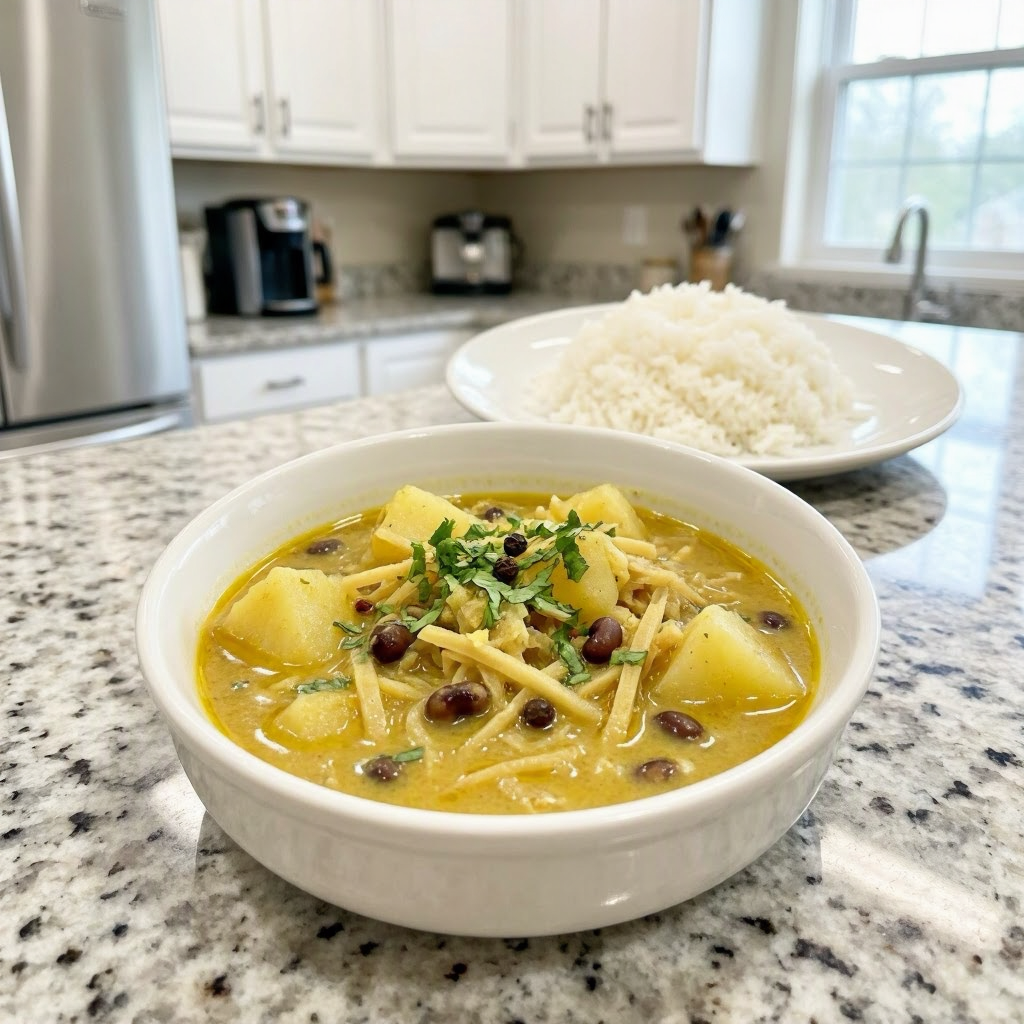
If you have ever been served aloo tama in a Nepali home, you remember the smell first, the unmistakable funk of fermented bamboo shoots blooming in hot mustard oil. It is the scent of the hills: of monsoon kitchens in the middle hills, of grandmothers stirring big pots over wood smoke, of bamboo poles drying outside the pidhi. The dish itself is alchemy. Sour fermented bamboo (tama) meets the earthy comfort of potatoes and the mild bite of black-eyed peas (bodi), all bound together by timur and the herbal whisper of jimbu. There is nothing in the world quite like it.
This is the trio version, aloo tama bodi, the way it is most often eaten in the hills. Skip the bodi and you have a quicker weeknight curry; keep them and you have a one-pot meal that makes a bowl of plain rice feel like a feast.
Ingredients
- 3/4 cup dried bodi (black-eyed peas), soaked overnight in plenty of water
- 1.5 cups tama (fermented bamboo shoots), jarred or canned, drained and rinsed, cut into 1-inch pieces
- 3 medium potatoes (about 500 g), peeled and cut into 1-inch cubes
- 3 tablespoons mustard oil
- 1/4 teaspoon methi (fenugreek) seeds
- 1 dried red chili, broken in half
- 1/4 teaspoon jimbu (Himalayan herb), if you can find it, do not skip
- 1 large onion, finely sliced
- 1 tablespoon ginger-garlic paste
- 1 medium tomato, finely chopped
- 1 teaspoon turmeric powder
- 1 teaspoon ground coriander
- 1/2 teaspoon timur (Nepali Sichuan pepper), lightly crushed
- 1.5 teaspoons salt, or to taste
- 4 cups warm water (more as needed)
- 2 tablespoons fresh cilantro, chopped, for garnish
Instructions
Pre-cook the bodi: Drain the soaked black-eyed peas. Place in a pot with 4 cups of fresh water and 1/2 teaspoon salt, bring to a boil, then simmer uncovered for 25–30 minutes until just tender but still holding their shape. Drain, reserving the cooking liquid. (To save time, you can pressure-cook for 8 minutes with natural release.)
Bloom the mustard oil: Heat the mustard oil in a heavy-bottomed pot over medium-high heat until it just begins to smoke and the raw bitterness lifts off. Reduce heat to medium and add the methi seeds, dried chili, and jimbu, they should sizzle and turn a shade darker within 10 seconds. This jhanne is the foundation of the dish, so use your nose: when it smells nutty and toasted, move on quickly.
Build the base: Add the sliced onion and cook, stirring often, for 6–8 minutes until deep golden brown, patience here is what separates a good curry from a great one. Stir in the ginger-garlic paste and cook for 1 minute, then add the chopped tomato, turmeric, and coriander. Cook for 4–5 minutes, mashing the tomato with the back of the spoon, until the oil starts to separate at the edges.
Add the potatoes and tama: Tip in the cubed potatoes and fermented bamboo shoots. Stir well to coat in the masala and cook for 2–3 minutes, letting the tama release its sour aroma into the oil. This step blooms the bamboo’s tang into the base.
Simmer: Add the cooked bodi along with the reserved cooking liquid plus enough warm water to total about 4 cups. Add the salt. Bring to a gentle boil, then reduce heat, cover partially, and simmer for 20–25 minutes, stirring occasionally, until the potatoes are fork-tender and the bodi are creamy. The curry should be loose and slightly soupy, a proper aloo tama is closer to a stew than a dry tarkari.
Finish: Stir in the crushed timur and check the seasoning, the bamboo will already be lightly salty, so taste before adding more. Cover and rest off the heat for 5 minutes so the flavors settle. Garnish with fresh cilantro.
Serving suggestions
Serve hot over plain steamed rice or with daal bhat for a true hill meal. A spoonful of plain yogurt on the side balances the tang beautifully, and a small dish of bhatmas sadheko gives crunch. In the hills it is also eaten with dhindo, a stiff buckwheat or millet porridge that soaks up every drop of the broth.
Notes
- Tama is sold in jars or vacuum packs at most South Asian or East Asian groceries. The smell is strong out of the jar, that is normal and cooks down beautifully. Look for bright, firm shreds rather than mushy or grey ones.
- For a non-vegetarian variation, add 250 g of chicken or pork pieces along with the potatoes and increase the simmer time by 10 minutes.
- Leftovers improve overnight as the flavors deepen, just loosen with a splash of water when reheating.